
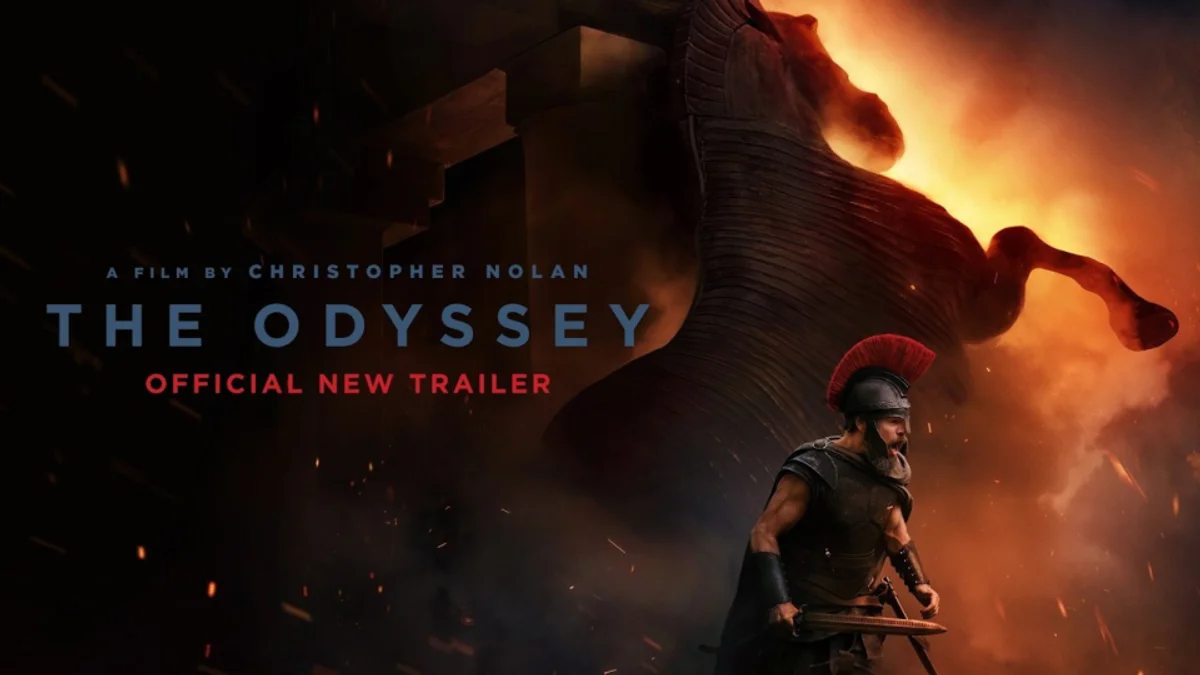
The Dark Knight Rises held the record for fourteen years
The previous benchmark dated back to 2012. With roughly $1.085 billion worldwide, The Dark Knight Rises remained the biggest film of Christopher Nolan’s career for fourteen years.
The Odyssey moved past it during its fourth weekend in theaters. On August 10, Universal and Syncopy officially announced that the film had become Nolan’s highest-grossing release worldwide less than a month after opening.
At that point its total had already exceeded $1.1 billion. Estimates published after the August 16 weekend subsequently placed it around $1.29 billion. The record has therefore not merely fallen; the gap is continuing to grow.
Nolan beat Batman with a poem almost three thousand years old
That is what makes the result more interesting than another box-office ranking. The Dark Knight Rises had a globally recognized superhero, two enormously successful preceding films and the full commercial power of Batman behind it.
The Odyssey starts with source material that is just as culturally famous but far less obvious as a contemporary blockbuster. Universal is selling a nearly three-hour adaptation of Homer, rated R in the United States, with Matt Damon playing Odysseus on his journey home after the Trojan War.
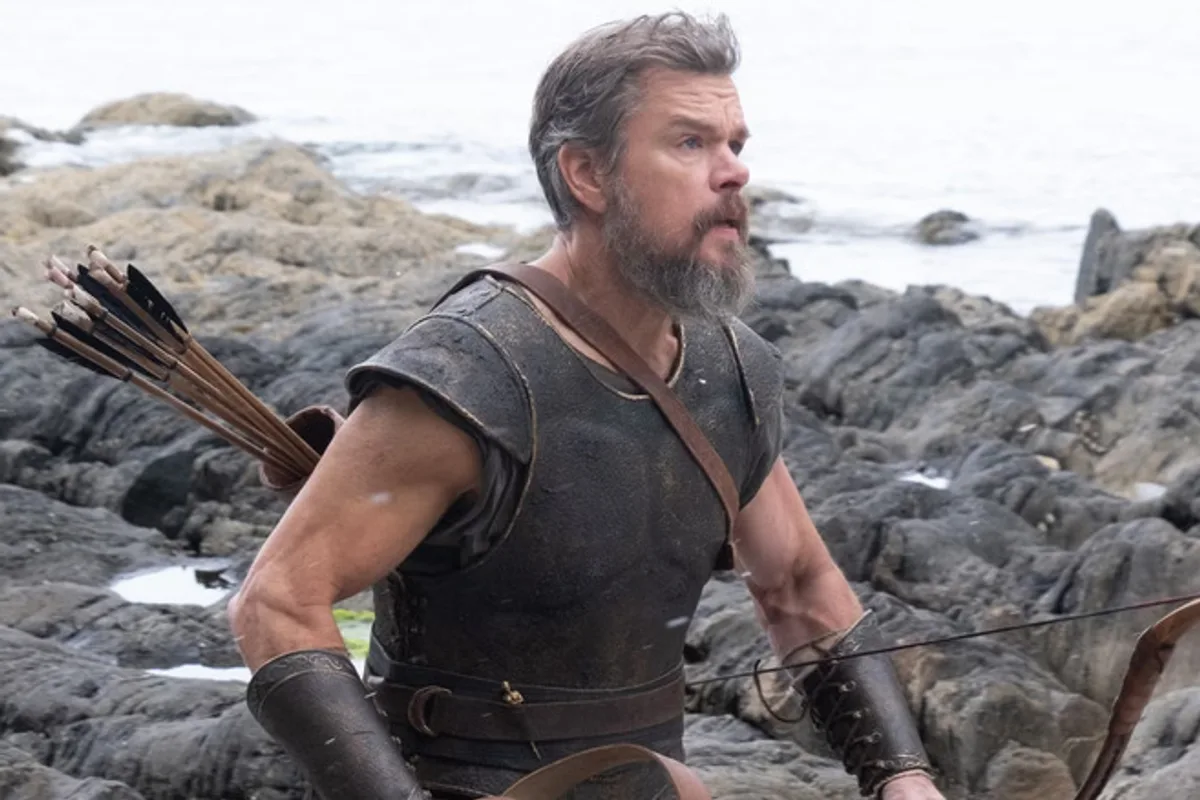
There is no cinematic saga audiences need to catch up on, no superhero reunion and no crossover promise. The production obviously benefits from an enormous cast and one of the foundational stories of Western culture, but its main commercial continuity belongs to the filmmaker.
After Oppenheimer, Nolan’s name is becoming commercial intellectual property
Oppenheimer had already sent an extraordinary signal. The 2023 historical biopic finished its worldwide theatrical run at roughly $976 million, an exceptional result for a three-hour adult drama centered on a physicist and the development of the atomic bomb.
The Odyssey turns that exception into something closer to a pattern. Nolan can now change genre, period and subject while retaining an ability to turn his own name into an international event.
Universal itself describes that relationship in terms of the trust Nolan has built with audiences. Commercially, that matters: moviegoers are not buying tickets only for Odysseus, Matt Damon or IMAX. A portion of the audience is buying the new Christopher Nolan film.
That is usually the behavior studios try to create around a franchise. The difference here is that continuity is built around a filmmaking promise rather than a fictional universe.
The theatrical spectacle is part of the business model
That promise has also been built around a very tangible technical selling point. The Odyssey is the first feature film shot entirely with IMAX film cameras, something Universal and Nolan placed at the center of the marketing campaign.
IMAX was not merely a prestige label. By the weekend when the film became Nolan’s personal box-office record holder, it had also become IMAX’s highest-grossing release ever, with roughly $289 million generated through the format according to figures announced at the time.
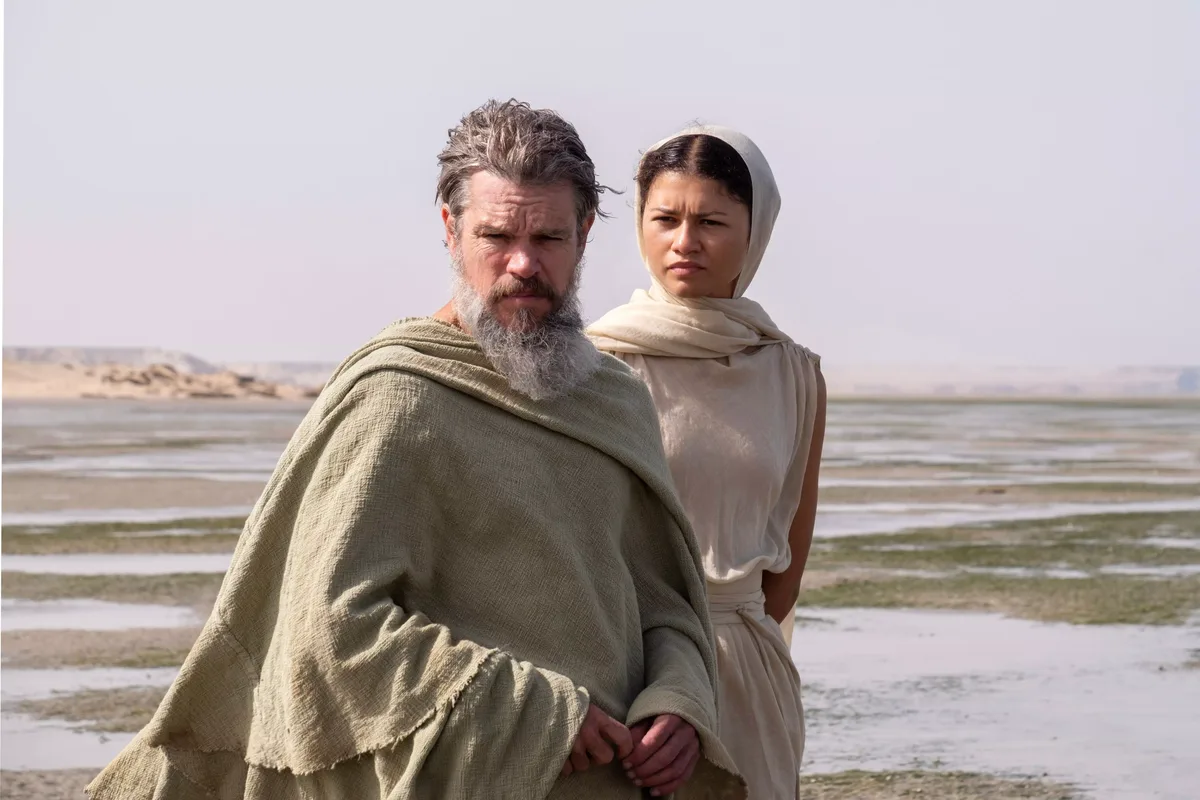
That turns premium exhibition into part of the product itself. IMAX 70mm screenings are scarce, premium tickets cost more, and the conversation around the ideal way to experience the movie encourages a kind of theatrical pilgrimage that streaming cannot immediately reproduce.
For Universal, that scarcity helps keep The Odyssey positioned as an event weeks after opening rather than as a release consumed during a single launch weekend.
France has become one of the clearest examples of that staying power
The phenomenon is particularly visible in France, where the film opened on July 15. Universal France announced in August that The Odyssey had passed six million admissions, making it Nolan’s biggest French theatrical success.
It has moved beyond the French totals of films including Inception and Oppenheimer while continuing to draw substantial audiences several weeks into its run.
That endurance is essential for a blockbuster on this scale. A massive opening creates an event; keeping enough people in theaters four or five weeks later turns initial curiosity into a genuine cinema phenomenon.
The billion-dollar club no longer belongs only to conventional franchises
Most films that reach this level of revenue use intellectual property already structured for repetition: superheroes, family animation, sequels or shared universes.
The Odyssey demonstrates another route. Homer’s poem is obviously one of the best-known stories in the world, but audiences were not prepared by a decade of previous installments. The connection between this film, Oppenheimer, Dunkirk and Interstellar is primarily Christopher Nolan himself.
That does not mean any filmmaker can become a human franchise. Nolan built this position over more than two decades through films that repeatedly associated his name with a particular kind of large-scale theatrical experience.
For Hollywood, however, the result is valuable. At a time when studios are constantly searching for the next brand capable of filling theaters, Universal has something much rarer in Nolan: a filmmaker whose commercial value survives a complete change of subject.
The personal record may still grow
The Odyssey remains in theaters. The roughly $1.29 billion observed after the August 16 weekend is therefore not necessarily its final worldwide total.
The ranking itself is settled. Nolan reached his previous commercial peak with the conclusion of his Batman trilogy. He has now surpassed it with an adaptation of Homer.
That reversal neatly summarizes the evolution of his career: once a director hired to give a prestigious identity to a franchise, Nolan is now powerful enough for his own signature to perform that function.