
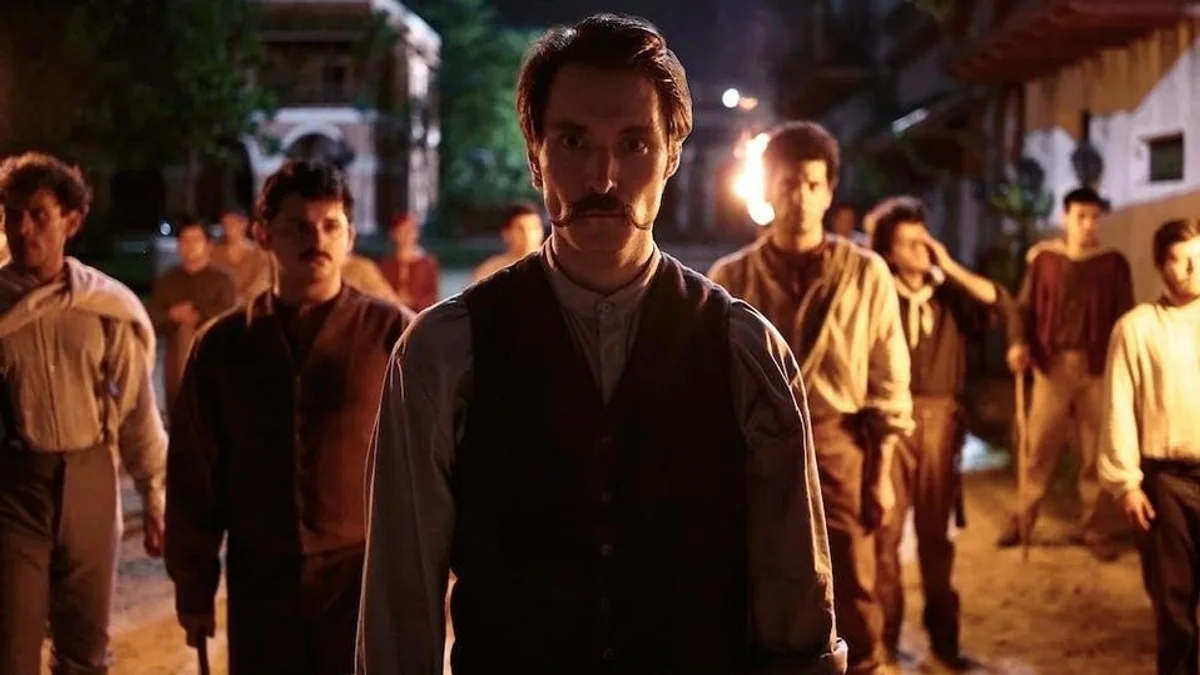
The first seven episodes of Part Two arrived on August 5. They carry Macondo through roughly another fifty years, moving beyond Colonel Aureliano Buendía's wars and into generations that inherit a town increasingly connected to the outside world.
Laura Mora and Carlos Moreno divide those seven chapters between them. Mora then takes sole directing credit on the Grand Finale. Netflix says the decision to separate it was creative rather than merely promotional: during writing and pre-production, the team concluded that the end of Gabriel García Márquez's novel needed a format larger than an ordinary episode.
The town finally gets what its founder wanted
José Arcadio Buendía spent the early story dreaming of connection, discovery and inventions that might pull Macondo beyond its isolation. Part Two finally grants a version of that wish through José Arcadio Segundo and the arrival of the railroad.
The result is not liberation. The railway brings the banana company with it, and the official synopsis places that development at the center of Macondo's collapse. Progress changes the town, outside interests settle in, and the later Buendías inherit consequences that are considerably less magical than flying carpets or rains of flowers.
The series is moving toward material that makes García Márquez's fictional family history inseparable from political violence, labor conflict and deliberate forgetting. That gives the ending a different rhythm from the founding of Macondo. The question is no longer how a world can be created. It is how a world disappears while people are still living inside it.
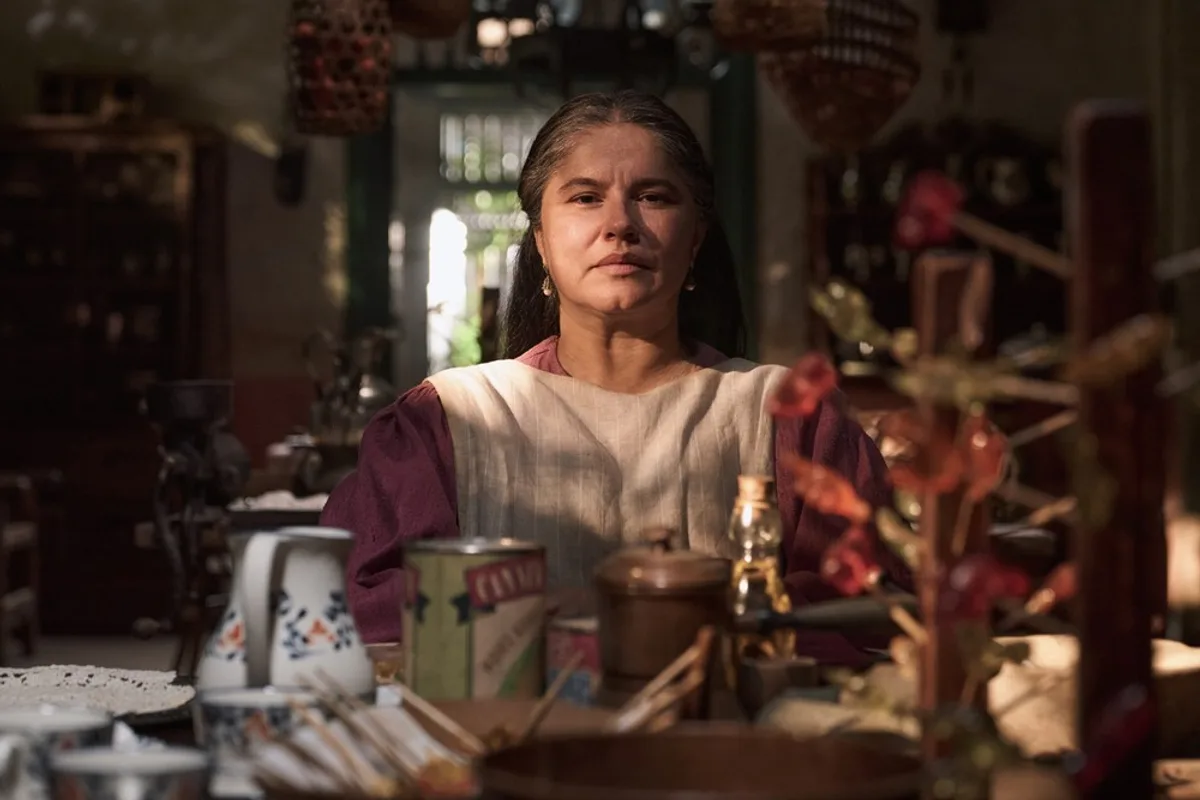
The cast has to age faster than the mythology
Marleyda Soto returns as the older Úrsula Iguarán, while Claudio Cataño remains Colonel Aureliano Buendía. The later generations introduce Ángela Cano, Emmanuel Restrepo, Estefanía Piñeres, María Adelaida Puerta, Emiliano Pernía, Juanita Molina, Laura Taylor, Obeida Benavides, Julián Román and Carla Baratta among others.
That turnover is essential to the adaptation. García Márquez repeatedly recycles names and personality traits across the Buendía family, making resemblance part of the story rather than a casting inconvenience. Television has to communicate those echoes with new actors, new ages and sometimes only a few episodes before another generation takes over.
A feature-length ending solves an old adaptation problem
There is a fitting reason the production ended up stretching its final episode. García Márquez resisted screen adaptations for years in part because a conventional movie could not comfortably contain the novel's time span. His son Rodrigo García said when the Netflix project was announced that his father had also considered Spanish essential to any adaptation.
The series eventually answered those concerns through scale rather than compression. It was shot entirely in Colombia and in Spanish with the support of García Márquez's family. Dynamo produced the project, and Part Two filmed across Magdalena, Boyacá, Cundinamarca and Tolima.
Netflix describes the production as one of the most ambitious audiovisual projects made in Latin America. Its full structure now amounts to sixteen episodes: eight in the first part, seven released together for the second, and the special finale.
Laura Mora gets the final chapter
Mora has said the second part was approached with a more cinematic scale in its visuals, sound and music. The finale pushes that logic furthest, giving the last stage of the Buendías' story a separate release rather than hiding it at the bottom of an eight-episode drop.
The Grand Finale of One Hundred Years of Solitude premieres on Netflix on August 26.